
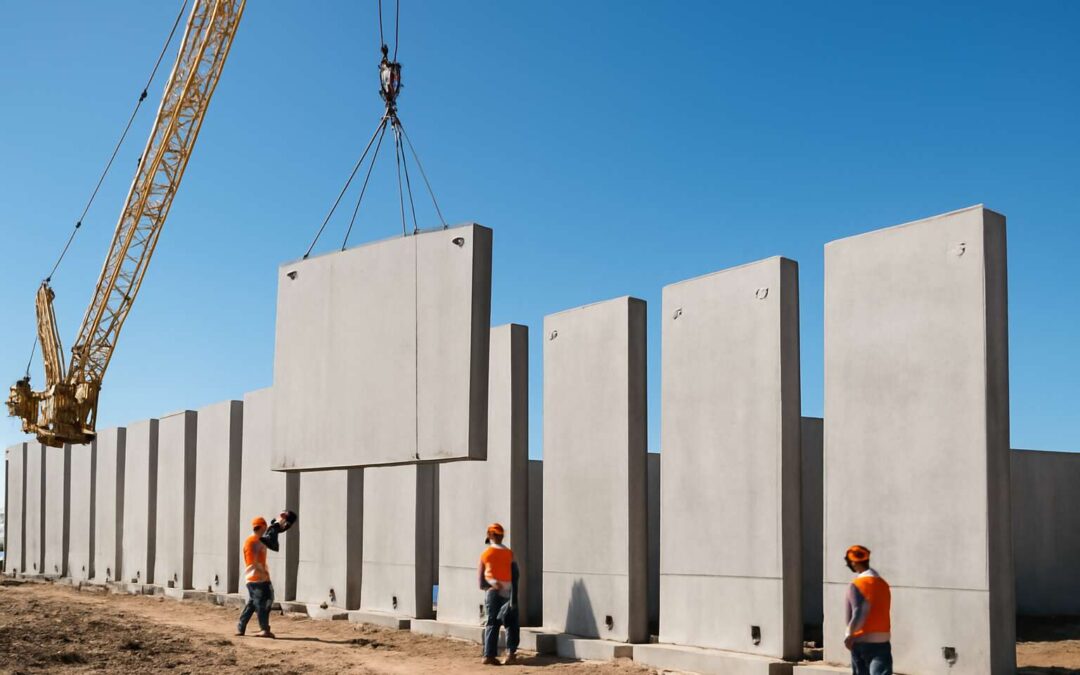
Price factors for precast wall systems
Material and labor costs for precast walls
Across South Africa, precast walls cost can surprise builders when you factor in faster on-site turnover and reduced weather risk. A recent industry pulse shows project completion speeds up to 30%, turning installation into real cash flow and tighter schedules.
Price factors for precast wall systems hinge on fabrication, transport, and timing. Key influences include production lead times, distance to site, and finish quality.
- Factory backlog and production rates
- Transport distance and fuel costs
- On-site crane time and weather windows
- Joint detailing and surface finishes
Each element nudges precast walls cost up or down, echoing schedule pressures and procurement choices.
Material and labor costs for precast walls reflect concrete strength, steel reinforcement, and the complexity of finishes, as well as the labour market in SA. Though materials dominate at times, faster assembly reduces on-site labour and crane hours, shaping the overall cost narrative.
Size, thickness, and panel variation impact
Size decisions on precast walls in South Africa are more than aesthetics; they quietly shape the pocketbook. A single panel choice can ripple through transport costs, crane time, and joint detailing. Industry chatter suggests that the interplay of size, thickness, and panel variation can swing precast walls cost by a meaningful margin on complex builds.
Larger panels reduce joints and speed assembly, but they tilt toward heavier transport and tighter site handling. Thicker sections drain more concrete, push weight limits on trucks, and influence curing time and system insulation. Panel variation—custom shapes, finishes, or buffer zones—lets you tailor aesthetics but adds moulds, QA checks, and lead-time.
Key levers to balance include:
- Panel size and modular design
- Thickness and weight limits
- Finish variety and production lead times
Customization and design complexity fees
Across South Africa’s building sites, customization fees can swing precast walls cost by a meaningful margin on complex projects. A recent industry snapshot shows that design complexity and finishes drive price beyond the base panel price, so plans should include this as a real budget lever.
Customization and design complexity fees drive the variance in total price. Unique shapes, textures, or integrated openings change moulding, QA, and lead times.
- Unique shapes and openings
- Special finishes and textures
- Added QA checks and longer lead times
These factors push the overall precast walls cost upward when the design pushes beyond standard modules and complicates on-site handling and delivery schedules.
Transport and installation charges
Across South Africa, transport and installation can swing the precast walls cost by surprising margins, especially on tight-access sites. A current industry pulse shows that panels shipped far from the yard and then wrestled into place add costs that linger in the budget long after the crane leaves. That hidden toll means plans must respect logistics as a real budget lever, not an afterthought.
- Site access and distance
- Cranes, rigging, and crew mobilization
- Terrain, weather, and delivery windows
- Scheduling with suppliers and haulers
On-site handling quirks, access ramps, and delivery cadences can nudge the total price upward when routes are less forgiving and time windows tighten, leaving a lingering whisper in the project ledger.
Regional pricing and market dynamics
Local labor rates and material availability
In South Africa, regional pricing for precast walls cost can swing by double digits between provinces. Across the country, pricing tracks the cadence of local supply chains and demand swings. A project in Gauteng may race ahead of one on the coast, not because the design shifts, but because plant capacity and crew availability tilt the quote. The result is a living metric that mirrors regional realities rather than a fixed figure.
- Local labor rates and availability of skilled trades
- Material availability and supplier lead times
- Transportation distances and regional duties or tariffs
Market dynamics—fuel costs, logistics networks, and currency movements—shape price visibility, with the rand’s rhythm quietly echoing through regional quotes. Clues lie in regional demand cycles and the pace of local fabrication. The metric remains nuanced, reflecting how South Africa’s construction climate quietly informs every quotation.
Transportation, lead times, and logistics
Regional pricing for precast walls cost in South Africa keeps estimators edgy like a soap opera cliffhanger. The figure isn’t a fixed number; it’s a living metric that breathes with supply chains, plant capacity, and currency quirks. Across provinces, quotes shift by double digits as local realities—fuel, crew availability, and lead times—play tag with demand. The rand’s mood rings quietly through price visibility, turning a straightforward build into a regional negotiation. In short, precast walls cost reflects local rhythms more than national averages.
- Transport distances and fuel burn that vary by province
- Production capacity and regional demand cycles
- Currency movements and tariff nuances
Keep an eye on how these forces ripple into quotes; you’ll see the regional pricing dance in the numbers rather than in headlines.
Climate and site preparation effects on cost
Market trends, tariffs, and supply chain volatility
Regional pricing behaves less like a straight line and more like a surfable current, and South Africa sits squarely in its undertow. A recent industry snapshot shows precast walls cost can swing by double digits as tariffs shift, rand wobble, and freight networks hiccup. Market dynamics now hinge on policy tweaks, local supplier health, and the pace of project approvals. It’s not about guessing the next quarter—it’s about riding the volatility with smart sourcing and regional awareness.
To map the terrain quickly, here are regional drivers:
- Tariffs and duties on building materials
- Local steel and cement price tides
- Freight costs and port congestion
- Seasonal demand and skilled-labour availability
All told, the cost in South Africa reflects policy, currency, and logistics—hardly a straight line, yet instructive.
Cost comparison with traditional wall options
Upfront investment vs long-term savings
Across South Africa’s building sites, upfront investment versus long-term savings guides many decisions. On many projects, the precast walls cost can look steep at first, yet erection can be up to 30% faster, with weather resilience and predictable maintenance. Traditional brick walls can lag in erection and invite touch-ups, tipping costs in the long run even when the initial price seems lower.
- Faster construction reduces site overhead
- Lower ongoing maintenance and fewer cracking issues
- Predictable material costs amid volatility
Over the life of a project, the balance tilts toward durability and rapid occupancy. When the upfront precast walls cost is weighed against the realities of rural construction, the picture reveals not just dollars but fewer storms to weather and fewer sleepless nights about repairs.
Lifecycle costs: maintenance, energy efficiency, and durability
Across SA construction sites, precast walls cost downtime dramatically; some industry insiders note on-site time can drop by up to 30%. When you weigh maintenance, energy efficiency, and durability, the economics lean toward precast. The upfront price might look steep, but the lifecycle value is kinder to cash flow.
- Lower ongoing maintenance and fewer cracking issues, thanks to precision joints and factory quality.
- Energy efficiency gains from tighter tolerances and better insulation, reducing heating and cooling loads.
- Durability that withstands weather, moisture, and heavy usage, shortening occupancy timelines and follow-up repairs.
Traditional brick or block walls may seem cheaper at first glance, yet the long game includes touch-ups, repainting, and weather-related repairs. In rural and remote sites, where storms and delays are common, precast wins by delivering predictable material performance and faster occupancy—a quiet revolution that makes the value story more than a sticker price.
Insurance, warranties, and financing considerations
In the theatre of construction budgets, the opening act is rarely the sticker price alone. The precast walls cost may look formidable at first glance, yet the curtain soon rises on smoother economics with predictable deliveries and fewer surprises!
Insurance premiums reflect risk, and factory-controlled joints with moisture barriers can lower exposure, translating to steadier quotes. Warranties from manufacturers are often longer than for traditional walls, covering panels, joints, and corrosion resistance. Financing favors predictable cash flows and shorter drawdowns, with potential retrofit allowances and depreciation on structural systems.
To weigh options, consider these anchors:
- Insurance: impact on premiums and claimability
- Warranties: duration, coverage scope, and conditionalities
- Financing: payment schedules, eligibility, and tax implications
In the end, the economics of precast walls cost are less a line-item than a lifecycle narrative, where risk, speed, and occupancy timing barter for a more disciplined cash flow.
Case studies and benchmarks from projects
Across South Africa’s skylines, precast walls cost a story that goes beyond sticker price. Recent benchmarks show enclosure speeds ten to twenty-five percent faster than traditional masonry, and weather-driven delays fade as factory floors hum with controlled craft. The rhythm of delivery turns risk into a predictable cadence, nudging projects toward occupancy without sacrificing design intent.
- Cape Town campus retrofit—enclosure completed 22% faster with reduced on-site weather exposure and tighter sequencing.
- Gauteng hospital expansion—labor costs trimmed by 15–20% and milestone dates met earlier.
- KwaZulu-Natal mall upgrade—scaffolding needs slashed and formwork savings enabling phased occupancy.
Viewed through the lens of a South African builder, these case studies reveal the real shape of value: speed, reliability, and occupancy timing command a more disciplined cash flow, even when the initial line item seems formidable.
Estimating precast wall costs for your project
Step-by-step budgeting checklist
Understanding precast walls cost isn’t a guessing game—it’s a budgeting superpower. ‘Budget creep is cheaper than surprises,’ says a veteran project manager, and he’s not wrong. I start with that number and let the rest fall into place. Early, precise estimates keep project timelines intact and wallets from doing cartwheels. In South Africa, savvy teams treat the number as a lighthouse, guiding decisions before the crane starts turning. The budgeting checklist that follows helps you nail the scope and avoid drama.
Here’s a lean checklist you can drop into your plan:
- Define scope and panel counts based on architectural drawings
- Request detailed quotes from a few preapproved suppliers and compare the all-in installed cost
- Buffer for site-specific factors and potential schedule shifts
With this, you’ll know where your budget sits and where to trim without sacrificing quality.
Data suppliers need to provide accurate quotes
On a wind-swept morning in South Africa, a veteran project manager reminds me that “budget creep is cheaper than surprises.” I approach estimating precast walls cost as a conversation with data, not a game of poker. When I start with a credible quote and treat it as a living guide, the rest of the plan settles into place. The aim is to keep timelines intact and pockets steady, even when site conditions refuse to cooperate.
Data suppliers need to provide accurate quotes, and those numbers should be treated as anchors rather than absolutes. Estimating costs for precast walls is more art than arithmetic, a line I walk with suppliers and site managers. I map the unknowns—soil, access, weather—and document the assumptions, letting questions sharpen clarity rather than derail momentum. This disciplined mindset makes the work feel less like risk and more like a journey toward a solid, finished project.
How to read and compare quotes
Budget creep is cheaper than surprises, a wind-swept South African dawn reminds me as I measure cost against the horizon. Estimating costs becomes a conversation with data, not a bluffing match. Start with a credible quote and treat it as a living guide.
I map the unknown: soil strength, access routes, rain; I document every assumption. Questions sharpen clarity rather than derail momentum, letting the team walk a measured path toward a solid finish.
- Scope and inclusions
- Assumptions
- Lead times
We anchor numbers to reality, treating quotes as anchors, not absolutes. The cadence of comparison becomes poetry with precision, guiding decisions that keep timelines intact and pockets steady. The precast walls cost remains a moving target.
Common price factors and risk items
Precast walls cost aren’t fixed—especially in South Africa, where weather, transport, and access bump the final tally. We treat estimating as a live forecast: the more we document soil strength, route constraints, and rain patterns, the tighter the range becomes. A credible quote anchors the conversation rather than missteps. The market seems to breathe and sway with seasons.
Common price factors and risk items include:
- Site access and haulage constraints
- Panel size, thickness, and variation
- Lead times and supplier reliability
- Local labour rates and material availability
These elements push or temper the precast walls cost and shape the budgeting rhythm, keeping momentum intact even as prices move with the market.
Tools and resources: calculators and benchmarks
Across South Africa, precast walls cost can drift by double digits from initial quotes to final invoices. A credible estimate acts like a lighthouse in a foggy site—clear, anchored, and constantly updated as soil strength, access, and weather shift. Treat estimating as a live forecast, not a one-off number, so the team stays aligned and momentum isn’t lost when markets swing.
Tools and resources streamline this process: precast walls cost calculators and benchmarks for accurate comparisons, plus project-specific cost models. Consider the following resources:
- online calculators
- benchmarks from comparable SA projects
- supplier portals and RFQ templates
These inputs directly influence precast walls cost and reduce surprises.
With the right tools, the dialogue around precast walls cost becomes tangible numbers, not guesswork, and the project calendar begins to breathe in sync with procurement and delivery schedules.
